
By Corey Frey, Pattern Design Manager, DigiCut
Every installer has an opinion on where a tint pattern should end at the bottom of the glass, and we hear about it often. Some want more coverage. Some want less. So why does DigiCut ship one version of each pattern instead of a short and a long option?
The short answer
Every pattern in our library follows a design policy we’ve held for 28 years: each piece runs one-eighth of an inch under the bottom seal. We hold that line for consistency, and consistency matters when you’re supporting a library this large. A second length would work fine on newer models, but it isn’t realistic on a 20-year-old car with a body style and seal that may not match anything currently in production. Building both versions across the full range would break the consistency we’ve spent nearly three decades protecting.
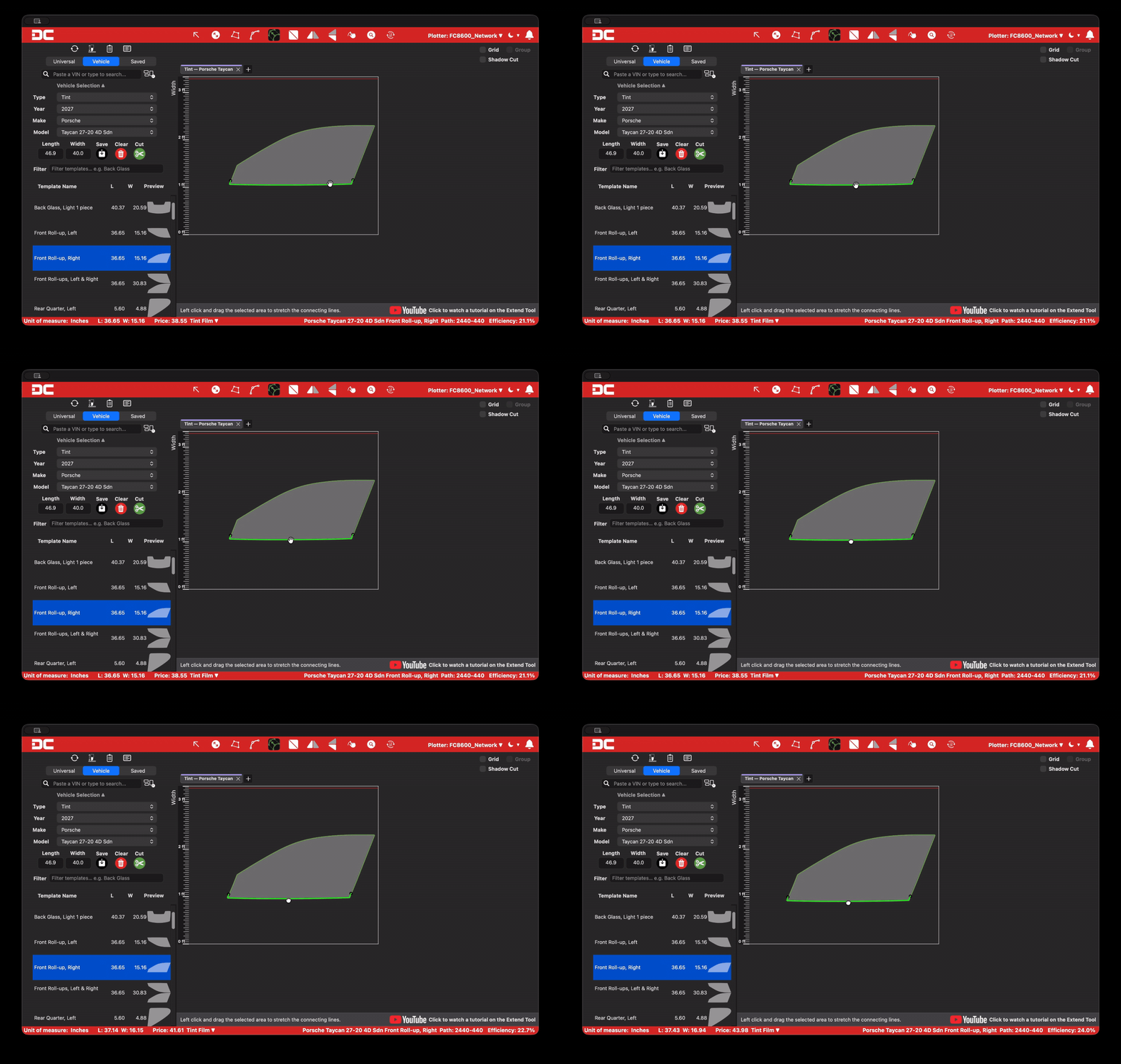
That’s why we built editing tools directly into the DigiCut software. You can extend or shorten any pattern to match your own preference, on any vehicle, without waiting on us to release a second version.
Why one standard works across 2,600-plus vehicles
Consistency across the DigiCut library means every pattern you pull behaves the way you expect it to, install after install, vehicle after vehicle. With more than 2,600 vehicles in the library, a single reliable baseline keeps your team fast and your results predictable. If half the library shipped in two versions and half shipped in one, you’d be guessing at what you were working with every time you opened a new file.
Every installer works a little differently
We hear from shops on both sides of this. Some installers run a longer pattern because they remove the door panel during install and want extra coverage tucked under the seal. Others run it long because they shave the film at the window edge before rolling it up, creating a custom finish. Plenty of other installers prefer a shorter pattern specifically because it means skipping the door panel removal and disassembly altogether.
Those are just different techniques for different shops, and our editing tools were built to support all of them from the same base pattern.
Turn your technique into an upsell
If you’ve developed a specialty technique, like shaving the film for a custom edge, that’s worth more than a workaround. It’s a selling point. Customers pay for craftsmanship they can see, and a hand-finished edge is something a shop running stock patterns typically won’t offer. Learning the editing tools well enough to build your own signature finish gives you something to market, not just something to explain.
One version also keeps cars moving
There’s a practical business reason behind the standard length too. A single, dependable version speeds up the workflow for shops that want to move fast. Less second-guessing per pattern means more vehicles through the bay in a day, and more vehicles through the bay means more profit at the end of the week.
The misconception worth clearing up
A lot of installers assume they’re stuck with whatever length the pattern ships with. Every pattern in the DigiCut library is fully yours to shape once it’s in your hands. The editing tools let you extend, shorten, and adjust to match your exact technique and your customer’s expectations, on any vehicle in the library.
Want help getting the most out of your patterns?
Reach out to DigiCut. We’re glad to walk through the editing tools and help you build a workflow that fits how your shop actually installs.